
Why Do I Keep Getting Bots in My Twitter Followers?

The symptom showed up most weeks as a notification pattern. Three or four new follower alerts in a row, all from accounts with zero-tweet profiles, generic names, and bios that read like template strings. I had been brushing them off as background noise on the platform until I ran an audit and realized the cumulative count was closer to 2,000 across my follower base, not the 50 or 100 I had been assuming.
The root cause was that bot operators target accounts that grow quickly or hit any kind of viral spike, because the follower-add behavior helps the bot accounts look more credible to their downstream targets. My account had been getting bot follows for the same reason most growing accounts do, and the trickle had accumulated into a visible drag on my engagement signal without ever showing up in the daily notifications loud enough to make me act.
Why do bots keep following you on X?
Bot operators target growing accounts because the follow-add signal helps the bot accounts look more credible. The pattern accumulates quietly until the cumulative count starts dragging the engagement rate.
Circleboom's Fake/Bot Followers audit runs against official X Enterprise APIs and scores every follower against the multi-signal bot pattern. The audit produces an auditable cleanup list, not a black-box verdict.
→ Find the bots in your Twitter followers
What I Had Been Misreading as Background Noise
For about eighteen months I had been treating the bot-follow trickle as a platform problem rather than my problem. The accounts looked fake on first glance, so I assumed the algorithm would filter their impact. The notifications looked like junk, so I dismissed them without thinking about whether the underlying followers were sticking around.
The realization came when I noticed my engagement rate had been drifting downward over a year without a content cause. I pulled the bot audit because the rate decline was unexplained, and the audit surfaced the cumulative count that had been hiding in plain sight. The trickle was small per day, but eighteen months of small daily trickles had produced a follower segment large enough to matter.
The reframe is that the algorithm does not filter bot followers from your engagement-rate denominator. It might filter the bot's content from your feed, but the bot still counts as a follower in your follower count, and the engagement rate calculation does not know the difference.
That math is what made the eighteen-month trickle matter. Circleboom's piece on bots that keep following you on Twitter walks through the same pattern across other operator accounts.
What Actually Drives the Bot-Follow Trickle
The bot-follow trickle has three structural drivers. The first is account growth signaling. Bot operators run discovery scripts that watch the platform's growing accounts and add follows from their stable of bot accounts to those targets, because the follow-add helps the bot accounts look like they engage with real content. The growth itself is the trigger.
The second driver is content visibility. Bot operators also seed follows when posts hit thresholds of impressions or engagement, because the follow correlates with reach. Viral posts and high-engagement threads attract bot follows mechanically, not because the bots are interested.
The third driver is incidental follow-back behavior. Some bot networks run mass-follow campaigns and pick up follow-backs from real users who do not check the followers before reciprocating. The follow-back chain then connects the bot to the real user's audience in ways the bot operator can exploit downstream. Circleboom's piece on a bot Twitter followers problem covers the structural drivers in more detail.
None of these three drivers are anything an account owner can prevent at the platform level. The trickle continues regardless of what you do as long as the account is growing or has any kind of visibility.
The fix is on the cleanup side, not the prevention side. Circleboom's piece on how to stop bots from following you on X covers the partial-prevention tactics that reduce the trickle without eliminating it.
How I Now Audit and Remove the Bot Followers
Connect the X account to Circleboom
- Log in to Circleboom Twitter and authorize the account with the official OAuth flow.

Open the Follower-Following menu
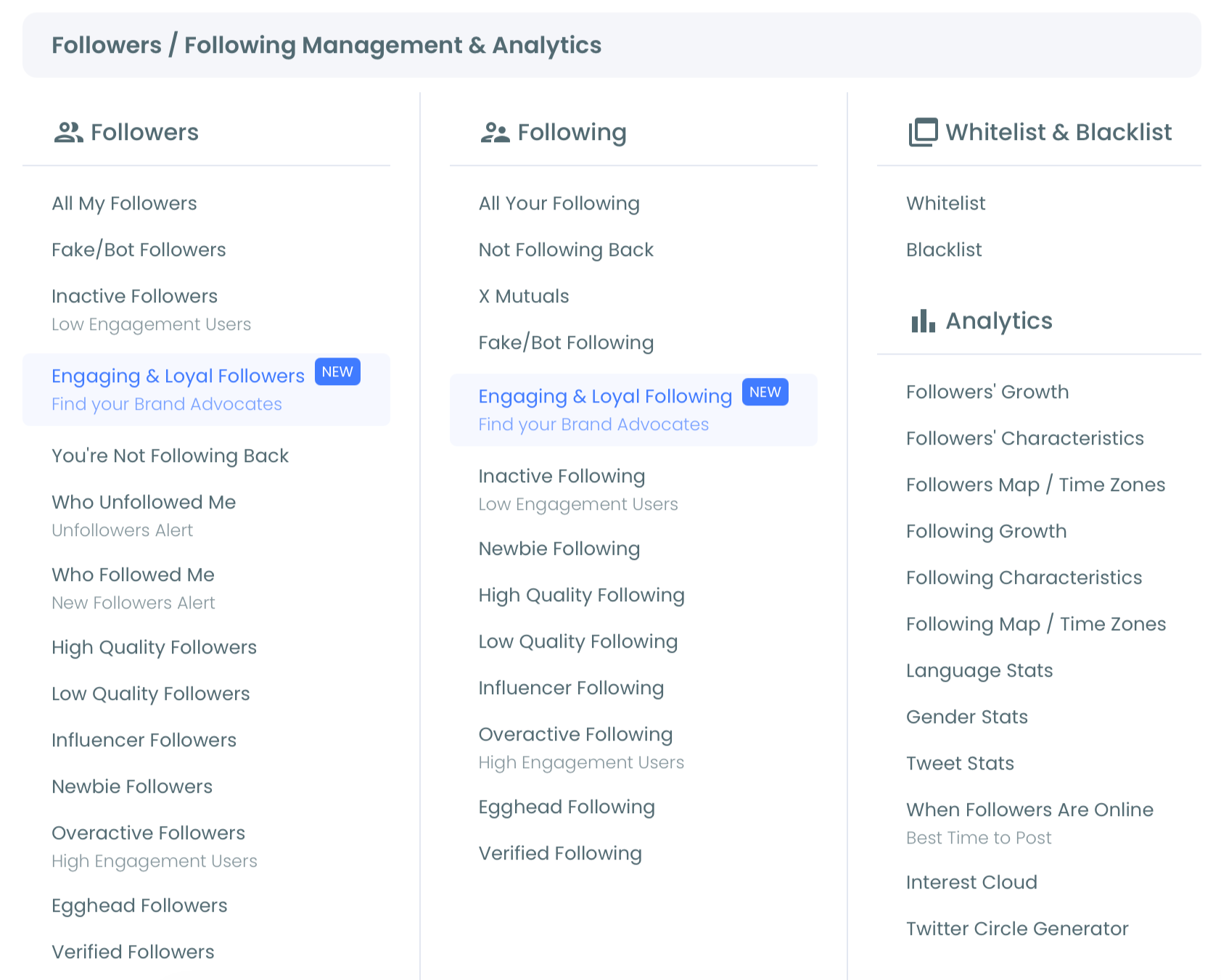
- Open the Follower-Following Management and Analytics menu and click Fake/Bot Followers to load the bot-pattern audit.
Walk through the scored list and check the signals per row
- Scan the flagged accounts by account age, lifetime tweet count, follower-to-following ratio, and visible activity. The audit pre-scores the highest-confidence flags at the top, so the review starts where the multi-signal pattern is clearest.
Whitelist false positives and run the cleanup in batches
- Mark any account that looks like a real low-activity follower with the whitelist function, then run the bot-removal action on the remaining flagged accounts in batches of 200 to 500 at a time so the cleanup stays within the bot-cleanup action surface and is easy to monitor.
The first time I ran this workflow, the audit surfaced about 1,950 bot followers from my follower base. After cleanup, my engagement rate climbed back about 0.4 percentage points within six weeks, just from the denominator change. The active-audience interaction count had not moved, but the visible rate was finally tracking what the active audience deserved.
Video walkthrough: the four-step audit and cleanup from OAuth login through batched bot removal.
What the Cleanup Returned and Where the False Positives Came From
The cleanup returned a measurable engagement-rate climb within six weeks and a more accurate audience-quality dashboard going forward. The visible follower count dropped by about 2.5 percent, which felt large in the moment but turned out to be the right call because the removed accounts had never engaged with anything I posted.
The false positives were illuminating. The audit had flagged about 60 accounts in my whitelist-review pass that turned out to be real low-activity followers, including two industry researchers I follow and value. The combined-signal scoring is robust but not perfect, and the whitelist step caught the false positives before any of them got removed.
The cleanup ran against Circleboom's status as an official X Enterprise Developer company and stayed compliant with X's platform manipulation policy throughout. The compliance layer mattered because the platform tracks tools that violate anti-spam rules, and an unsanctioned bot-removal tool running at this scale would risk account-level restrictions on me, not just on the bots.
Two adjacent surfaces help complete the audit picture. The follower-quality and following-quality scoring gives a complementary credibility view that overlaps with bot detection. The low-quality followers audit handles the silent-but-real follower segment that sits adjacent to the bot category.
External context that helped frame the trickle: X Help's platform manipulation rules cover the platform's own bot framing, and Circleboom's piece on the difference between bots and automated accounts walks through a distinction that is easy to miss when triaging.
Find the bots in your Twitter followers is the workflow that turned my eighteen-month trickle from a hidden cost into a one-pass cleanup.
Still Wondering?
Will the trickle restart after the cleanup is done?
Yes. The trickle is a function of account growth and visibility, both of which continue regardless of cleanup. A quarterly audit catches the next round of accumulated bot follows before they get large enough to matter.
Should I block the flagged accounts as well as remove them?
For most accounts, removal is enough. Blocking adds the overhead of maintaining a block list and does not produce additional engagement-rate benefit. Reserve blocking for accounts that have shown harassment patterns or that keep re-following after removal.
Can I export the list of removed bots for a record?
Yes. The audit supports CSV export of the flagged list before the cleanup runs, and the export can include the underlying signal data for any future review.
Will my real followers notice the cleanup?
Almost never. The follower count drops by the bot count, but the active engagement does not change because the removed accounts were not engaging. Most active followers do not check the follower count of accounts they follow.
Does the audit work for client accounts I manage on behalf of others?
Yes. The audit runs per connected X account, and the workspace supports multiple connected accounts under one Circleboom login.
How to Decide When the Next Audit Should Run
The audit is worth running again when the visible engagement rate starts drifting downward without a content cause, when the follower count crosses a growth milestone that triggers a more visible rate calculation, or when the account has been through a viral spike that likely attracted bot follows at higher than baseline rate. A quarterly cadence catches the trickle reliably for most accounts.
The audit is less urgent for accounts under 5,000 followers, where the bot trickle is usually small enough to manage by eye. For everyone else, the cumulative cost of skipping the audit shows up first in the engagement rate and then in the algorithmic distribution. The bot-detection audit is the workflow that catches it before the cost compounds into something larger.