
9 Ethics-Compliant Twitter Elements Every Attorney Should Run in 2026

Roughly 71% of attorneys avoid Twitter entirely or treat it as a marketing channel that conflicts with bar advertising rules, by the conservative read of attorney social-media surveys. The 29% running practice-supporting use cases produce 1-2 referrals per year from thought-leadership visibility, surface 3-5 research-relevant findings on active matters quarterly, and catch CLE and case-law developments earlier than email digests. The nine elements below are what the practice-supporting group runs and the avoidance group misses.
Each element corresponds to a specific bar-rule-compliant boundary or practice-relevant use case. Attorneys running all nine produce visibility and research value within ethics rules, on Circleboom's verified Enterprise developer access.
→ Open the Search Twitter Bios workspace
1. Substantive Doctrinal Thought-Leadership Cadence
2-3 posts per week on doctrine, regulatory developments, case-law commentary. Substantive tone keeps the cadence within bar advertising rules.
Hands-on demo: how to track URL clicks on Twitter as a tool for measuring thought-leadership reach.
https://www.youtube.com/watch?v=oeXO4PzM2C0
2. No Specific Case Commentary
Confidentiality and ethics rules prohibit specific case commentary. Stay at doctrinal and regulatory level; never reference active client matters.
The article on Twitter defamation and reputation protection covers a related public-record framing.
3. No Outcome Promises or Specialization Claims
Bar advertising rules limit outcome promises and specialization claims without certification. Frame thought leadership without guarantees.
4. Bio-Search Queries for Client and Witness Research
Configure bio-search queries by industry, role, geography, employer to surface public-record context for active matters.
The article on LinkedIn vs Twitter for professional growth covers a related platform-choice framing.
5. Expert-Witness Vetting Through Public Posts
Search published positions and post-history of opposing expert witnesses. Public records; admissible context for cross-examination preparation.
6. Opposing-Counsel Posting-History Review
Counsel's public posting history surfaces argumentative patterns and prior commentary on relevant doctrines. The article on find your brand advocates on X: the ultimate guide covers a related advocate-mapping angle.
7. Peer-Network Private List
Private list of 30-50 referral attorneys, CLE providers, and bar association accounts for daily passive monitoring. The article on the best tool for monitoring Twitter unfollowers covers a related monitoring angle.
8. Bar Association and Court Account Following
Following relevant state bar, federal courts, and circuit court accounts catches case-law developments and rule changes early.
9. Annual Bar-Compliance Review
Annual review of Twitter activity against current state bar guidance. Social-media rules update; cadence and content should be reviewed for continued compliance. The article on personal branding in 2025 for professionals covers a related credibility angle.
How the Nine Elements Compose
Elements 1, 2, 3 are the thought-leadership boundaries that fit bar rules. Elements 4, 5, 6 are the research-side use cases. Elements 7, 8 are peer-network and signal-monitoring. Element 9 is the compliance-maintenance layer.
A workflow including all nine produces visibility, research value, and CLE awareness within ethics constraints. A workflow including fewer than five usually fails one of the bar-rule, confidentiality, or credibility-preservation tests.
How the Workflow Actually Runs
The setup runs from one Circleboom dashboard.
Connect and configure
- Open Circleboom Twitter and connect your X account.

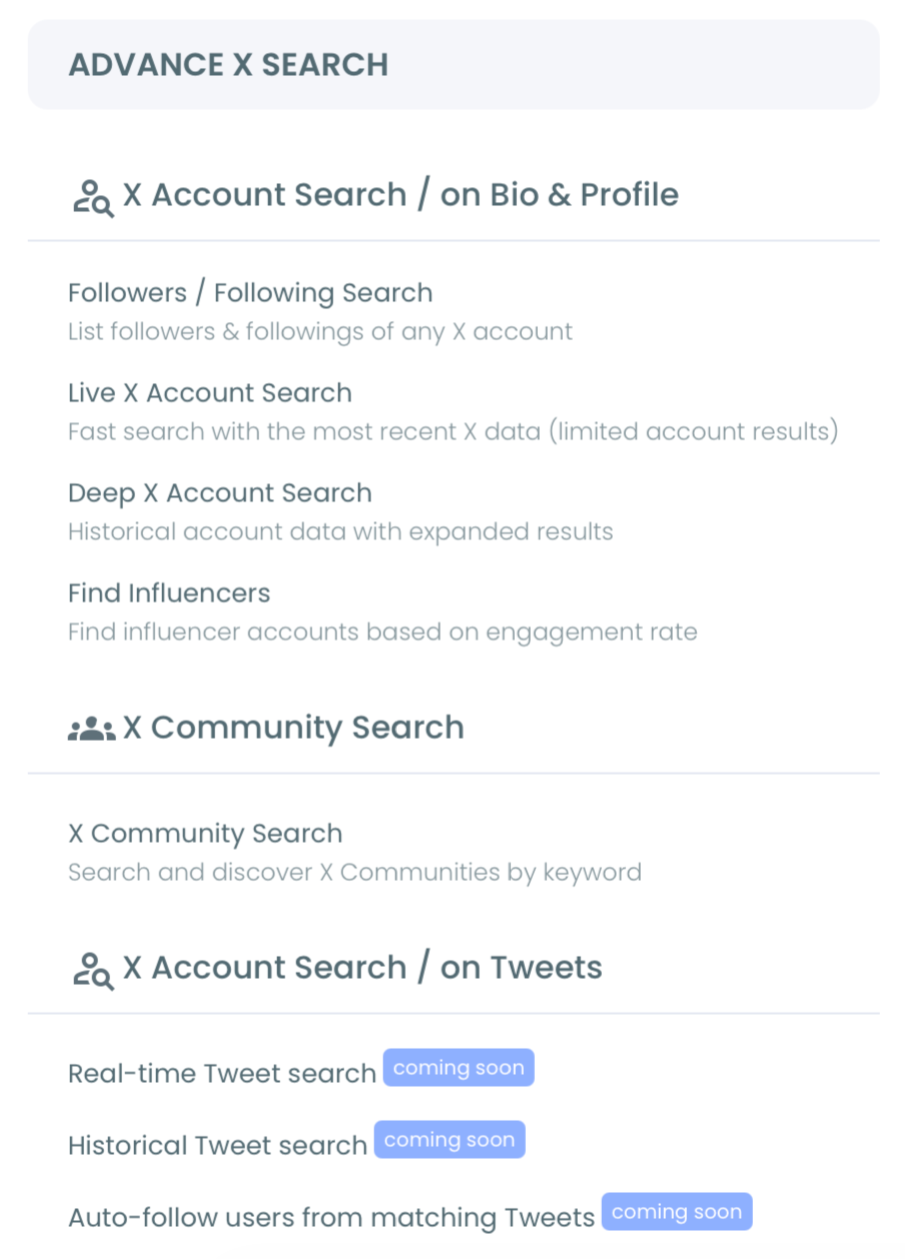
- Navigate to the Advanced X Search menu for the bios workspace.
Build thought-leadership cadence
- Build the 14-day queue at 2-3 substantive doctrinal posts per week.
Configure research queries
- Set client/witness, expert-witness, and opposing-counsel queries.
Build peer-network monitoring
- Build the private list of referral attorneys, CLE providers, court accounts.
Schedule recurring review
- Schedule the annual bar-compliance review on calendar.
That order runs all nine elements through one workflow. The dashboard handles search, scheduling, and analytics; the attorney handles editorial judgment and ethics-compliance review.
What the Marketing-Style Approaches Miss
The structural pattern across marketing-style attorney Twitter operations is bar-rule conflict, confidentiality drift, casual-tone credibility decay, and weak research utility. Marketing-style operators miss the ethics-compliant thought-leadership lane, the research-side use cases, the peer-network signal, and the annual-review compliance habit.
The nine-element stack covers the gaps marketing-style cannot fit within attorney constraints.
Mic Drop
Real Twitter for attorneys in 2026 runs nine practice-supporting elements within bar rules, confidentiality, and credibility-preservation. Marketing-style use produces ethics exposure without practice value; the practice-supporting approach produces practice value without ethics exposure. The math has been the same since state bars extended advertising rules to social media; the attorneys who get value from Twitter are the ones running the right framing.
→ Run the nine-element workflow now
Frequently Asked Questions
How long does the nine-element setup take?
About 2-3 hours for the initial configuration, queue build, and peer-network list. The recurring cadence runs about 90 minutes per week plus 15 minutes daily for peer monitoring.
Will the workflow scale to firm-wide use?
Yes. The cadence scales with firm capacity: solo practitioners run 1 thought-leadership post per week plus daily research as matters require; small firms run 3-5 posts across multiple attorneys with shared peer-network lists.
Do I need firm IT or general counsel approval?
Firm policies vary. Most firms allow substantive thought-leadership content; some require pre-publication review. Check the firm's social-media policy before starting.
Is the workflow safe under X's rules?
Yes. All elements run through Circleboom's Enterprise developer access. No scraping, no browser scripts, no automation outside platform policy.