
Why Most B2B SaaS Twitter Ads Fail (and the Stack That Works)

The popular framing on B2B SaaS Twitter ads in 2026 is that the channel is dying because conversion rates are low and CAC is high relative to LinkedIn and search. The framing is wrong. The channel produces uncompetitive economics in the paid-only configuration most teams run, and meaningfully better economics in the layered paid plus organic configuration most teams skip.
Paid-only approach: $150+ CAC, 0.4% click-through rate, channel cut after six months. Layered approach: $50 to $80 CAC, 1%+ click-through rate, sustainable pipeline contribution, on Circleboom's Enterprise developer access.
→ Open the layered B2B SaaS workflow
The decision tree below tells you which configuration to run.
What Operators Get Wrong About the Channel
The "Twitter ads are dead for B2B SaaS" framing comes from teams running paid-only campaigns and concluding the channel is uncompetitive. The conclusion is true for paid-only; it is false for the layered configuration. The framing failure is structural, not channel-specific.
Three observations from teams running successful B2B SaaS Twitter campaigns:
The buyer-cycle length matters. Paid-only campaigns deliver one touchpoint in a 30-to-90-day buyer cycle, which is not enough to build the trust that B2B buyers require. Layered campaigns deliver multiple touchpoints across formats.
The committee complexity matters. B2B SaaS purchases involve three to seven decision-makers on average. Paid ads reach a subset of the committee; organic engagement reaches different members. Layered campaigns reach more of the committee.
The cold-start penalty is unforgiving. Cold ads to cold audiences produce 0.3% to 0.8% click-through rates. Warm ads (after organic engagement) produce 1% to 3%. The difference compounds at scale.
The article on maximizing ROI with B2B lead generation campaigns covers the same dynamics from the strategy angle.
Decision Tree: Which Configuration Should You Run?
If you are a B2B SaaS team with monthly ad budget under $5,000: skip paid Twitter for now. The cold-start economics make paid-only uncompetitive at small budgets, and organic-only requires patience that competes with other channels. Focus the budget on LinkedIn or search ads.
If you have $5,000 to $25,000 monthly: run the layered configuration. The organic track produces the audience-warming necessary for paid to convert; the paid track scales the engagement.
If you have $25,000+ monthly: run the layered configuration with multiple engagement-amplifiers on the organic side. The scale requires more relationship-building bandwidth.
If you cannot commit to the organic engagement (no team member, no time): do not run paid Twitter for B2B SaaS. The cold-start penalty makes the channel uncompetitive without the organic layer.
What the Layered Approach Does Differently
Three operational decisions change.
Audience definition is shared
The same ICP keyword set drives both organic discovery (Circleboom Find Influencers) and paid targeting (X Ads Manager custom audiences). The two motions reach the same audience, which is what creates the layering effect.
Watch: how Find Influencers ranks B2B SaaS prospects by reach, engagement, and authority.
https://www.youtube.com/watch?v=hS1AplA1Whg
Engagement happens before paid impression
The organic track engages the audience for 30 to 60 days before paid campaigns target the same accounts. The pre-paid engagement is what warms the conversion path.
Retargeting is built from organic signals
Custom audiences in X Ads Manager are built from accounts that engaged with the organic posts. The retargeting is therefore relationship-grounded, which compounds the conversion effect. The article on your most engaging followers on Twitter covers the engagement-signal side.
Why Paid-Only Fails Specifically
The cold-start conversion rate of 0.3% to 0.8% multiplied by the cost-per-click produces CAC numbers that are 2x to 5x what LinkedIn and search produce for the same audience. B2B buyers behave the same on both channels; the difference is that LinkedIn and search audiences arrive with more context (LinkedIn from professional graph, search from intent-driven query).
Paid-only Twitter ads compete cold against contextually-warmer competitor channels, which is why they produce uncompetitive economics. The fix is to add the context through the organic layer, not to optimize the paid creative further.
What This Looks Like for Specific Use Cases
For developer-focused SaaS (Kubernetes, GraphQL, observability tools): the audience is heavily technical and present on X. Layered campaigns produce strong CAC because developers respond well to in-niche content engagement.
For revenue-tools SaaS (CRM, sales enablement): the audience splits between X and LinkedIn. Layered Twitter campaigns work but the LinkedIn version usually outperforms; budget allocation should reflect that.
For HR-tech and ops-tools SaaS: the audience tilts heavily LinkedIn. Twitter is a secondary channel; paid-only does not work, and even layered campaigns produce thinner pipeline than LinkedIn-led approaches.
How the Workflow Runs
The setup runs from one Circleboom dashboard plus X Ads Manager.
The flow, in order.
Open the workspace
- Log in to Circleboom Twitter and connect your X account.
- Navigate to the Advanced X Search menu for the discovery workspace.
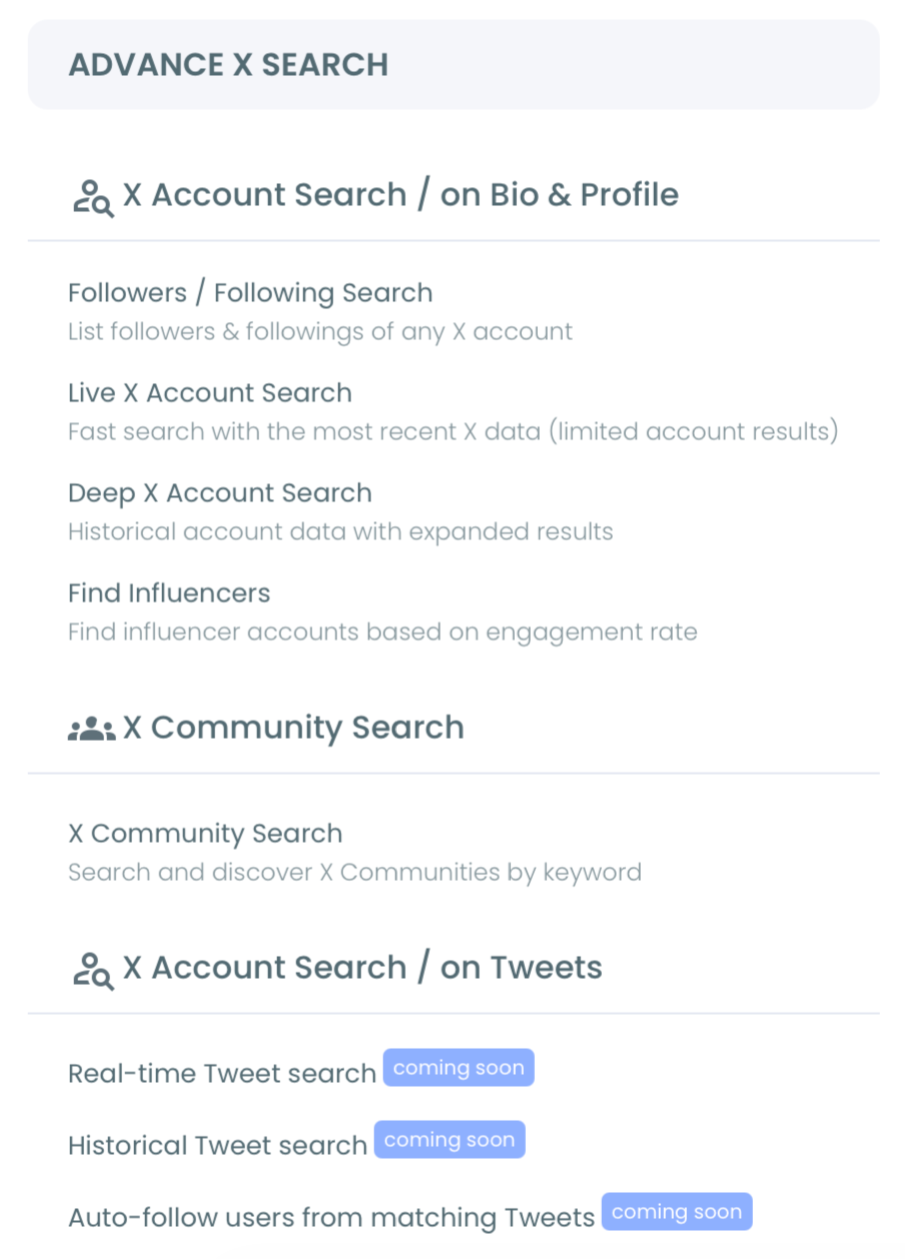
- Run Find Influencers with your B2B SaaS ICP keywords.
Build the engagement
- Tier accounts and run engagement on top-priority weekly.
- Track engagement signals through Engagement Analytics.
Layer paid
- Open X Ads Manager and target the same ICP.
- Build custom audiences from organic engagement signals.
That order runs the layered B2B SaaS workflow end-to-end.
What to Do This Week
If you are running paid-only and considering channel cut: pause the paid campaigns, run the organic discovery and engagement for 60 days, then resume paid. The 60-day investment usually produces the CAC improvement that saves the channel.
If you are running organic-only without paid: layer paid on top after 60 days of organic engagement. The audience-warming compounds the paid conversion rate.
If you are starting fresh: set up both tracks on day one. The combined motion produces results faster than either track alone.
Wrapping Up
The contrarian read on B2B SaaS Twitter ads in 2026 is that the channel works in the layered configuration most teams skip, and produces uncompetitive economics in the paid-only configuration most teams run. The fix is structural; the tooling is one Circleboom subscription plus X Ads Manager.
→ Run the layered B2B SaaS workflow now
Common Questions About B2B SaaS Twitter Ad Strategy
Will Twitter eventually beat LinkedIn for B2B SaaS?
For most B2B SaaS, no. LinkedIn's professional-graph context produces a structural advantage. Twitter is a useful additional channel, not a primary one for most B2B SaaS.
How much should I budget for the organic track?
The organic track is primarily labor cost (the engagement-amplifier role). Most teams allocate 0.25 to 0.5 FTE for the role at small budgets, scaling up with paid spend.
Can I run the layered approach with limited engineering resources?
Yes. The engagement-amplifier role is editorial, not technical. Marketing or sales-development team members typically run it.
Is the workflow safe under X's rules?
Yes. The organic side runs through Circleboom's Enterprise developer access; the paid side runs natively in X Ads Manager.