9 Things Every Visual Artist Needs on Twitter in 2026

Roughly 64% of artist accounts on Twitter run text-led posting habits modeled on non-visual creators, by the conservative read of artist-account audits. The 36% running visual-first cadence with proper alt text, weekly process threads, and targeted engagement produce 3-5x reach and 5-8x follower-conversion rates compared to text-led peers. The nine elements below are what the visual-first group includes and the text-led group skips.
Each element corresponds to a specific algorithmic or audience-acquisition dynamic. Artists running all nine produce compounding portfolio reach plus sustained fan-conversion, on Circleboom's verified Enterprise developer access.
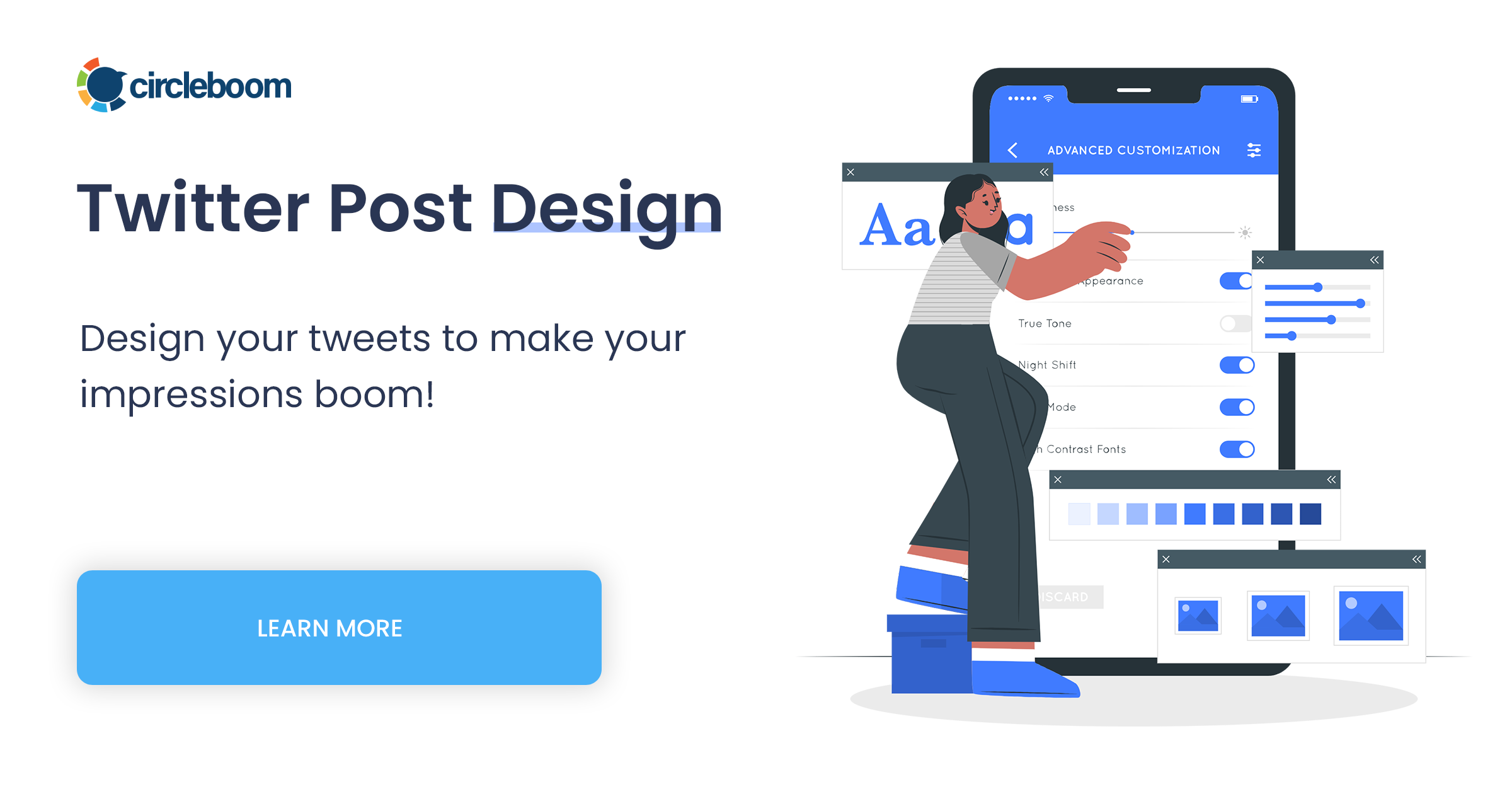
→ Open the Twitter Post Design workspace
1. Daily Image-Led Post
One image per weekday, image-led format with 1-2 sentence captions. Places the post in the algorithm's image-content distribution tier rather than the text tier.
Hands-on demo: how to follow back Twitter followers in one click for the targeted-engagement layer.
2. Detailed Alt Text on Every Upload
50-150 characters covering subject, medium, technique, color palette. Doubles as accessibility surface AND algorithmic topic-context signal.
The article on for brands, influencers, creators, and large X accounts: how to increase reach covers the broader reach framing.
3. High-Resolution Uploads (2048x2048+)
Twitter compresses uploads aggressively; uploading at suboptimal dimensions loses visible quality and algorithmic preference. High-resolution sources protect the visible quality.
4. Weekly Process Thread
6-10 tweets showing technique, materials, or commentary on the week's work. Converts casual viewers (likers) to followers at 5-8x finished-piece-only baseline.
5. Targeted Adjacent-Artist Engagement
15-30 minutes daily engaging with 3-5 adjacent artist accounts and their fan-replies. Surfaces the artist to receptive audiences through algorithmic association. The article on Instagram Reels vs. TikTok performance for content creators covers a related cross-platform creator-economy angle.
6. Audience-Active Scheduling
Schedule daily portfolio drops to audience-active windows the dashboard surfaces. Audience-active scheduling produces 30-50% more reach than operator-preferred scheduling.
7. Portfolio + Process Mix
70% finished pieces + 30% process content per week. Finished pieces produce engagement spikes; process content produces sustained fan conversion. The article on the best NFT Twitter Spaces covers a related community-building angle.
8. Niche Hashtag Discipline
3-5 niche-relevant hashtags per post (not 30-tag spam). Specific style hashtags ("#illustration," "#oilpainting") outperform generic ("#art") because niche audiences search and follow specific tags.
9. Quarterly Audience-Composition Review
Quarterly review of follower composition (style preference, geography, engagement tier) to confirm the audience matches the artist's actual style. Prevents drift when the artist's style evolves. The article on Instagram post design covers a related visual-craft cross-platform angle.
How the Nine Elements Compose
Elements 1, 2, 3 are the visual-first foundation. Elements 4, 6, 7 are cadence and timing. Element 5 is audience-acquisition. Element 8 is discoverability. Element 9 is audience-fit maintenance.
A cadence including all nine produces compounding portfolio reach plus sustained fan-conversion. A cadence including fewer than five usually plateaus at text-led-account performance.
How the Workflow Actually Runs
The setup runs from one Circleboom dashboard.
Connect and configure
- Open Circleboom Twitter and connect your X account.
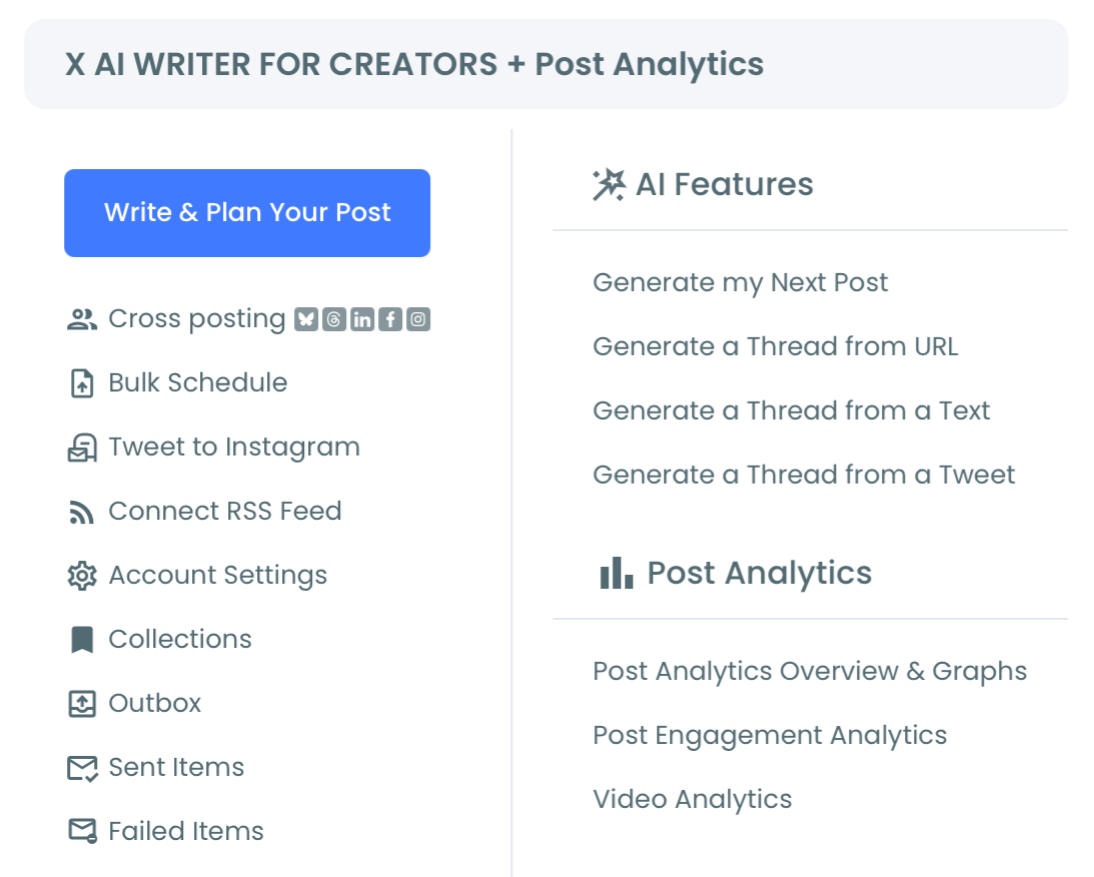
- Navigate to the X Post Planner menu for the Post Design workspace.
Build the daily cadence
- Build the 14-day image queue with high-resolution uploads and full alt text.
- Schedule audience-active windows for the queue.
Run the weekly process thread
- Schedule one 6-10 tweet process thread per week.
Activate engagement and review
- Block 15-30 daily minutes for adjacent-artist engagement.
- Run quarterly audience-composition reviews.
That order runs all nine elements through one workflow. The dashboard handles drafting, scheduling, and analytics; the artist handles editorial judgment and engagement.
What the Text-Led Approaches Miss
The structural pattern across text-led artist operations is wrong-tier placement, no alt text, finished-piece-only posting, no process threads, no targeted engagement. Text-led operators miss the algorithmic-tier upgrade, the discovery-signal lift, the fan-conversion process content drives, and the audience-acquisition that targeted engagement surfaces.
The nine-element stack covers the gaps that text-led posting leaves open.
Mic Drop
Real Twitter for visual artists in 2026 runs visual-first cadence. The 3-5x reach, 5-8x fan-conversion, and audience-acquisition lifts are not random; they are the predictable downstream effects of nine compounding habits. The math has been the same since the X algorithm differentiated image-led from text-led distribution; the artist accounts that compound are the ones running visual-first.
→ Run the visual-first cadence now
Frequently Asked Questions
How long does the nine-element setup take?
About 2-3 hours for the initial workspace configuration plus first queue build. The recurring cadence runs 90-120 minutes per week.
Will the workflow scale beyond solo artists?
Yes. The cadence scales with team capacity: solo artists run 5 portfolio drops + 1 thread per week; small studios run 10-15 drops + 2-3 threads. The targeted engagement layer remains operator-driven.
Do I need to run all nine elements from week one?
Start with elements 1-3 (image-led, alt text, high resolution) and 4 (weekly process thread). Add 5-9 once the core cadence is producing the algorithmic-tier upgrade. Trying all nine on day one usually produces inconsistency.
Is the workflow safe under X's rules?
Yes. All elements run through Circleboom's Enterprise developer access. No scraping, no browser scripts, no automation outside platform policy.